
Hidden milestones
TLDR: I passed my viva

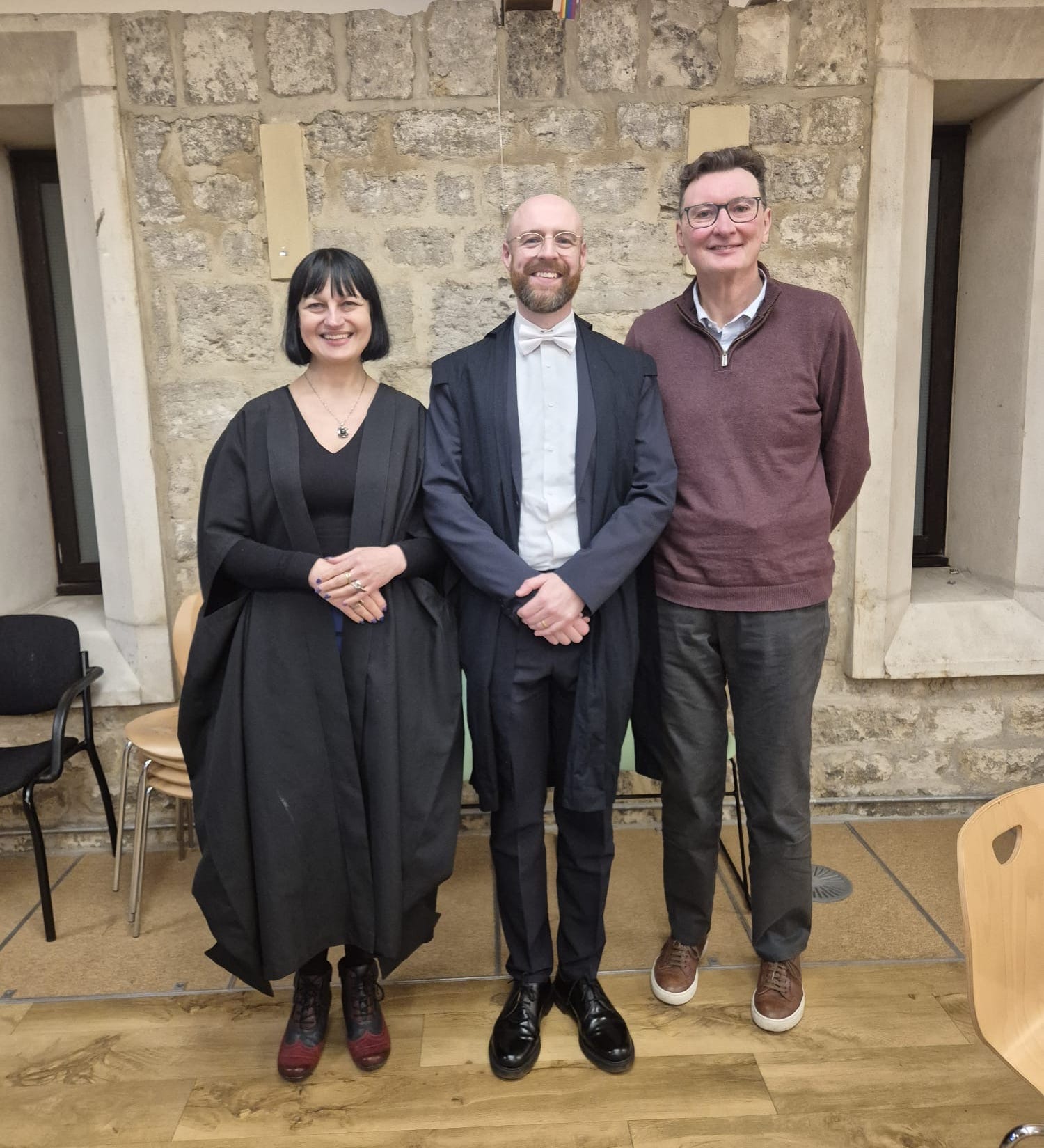
I passed my DPhil viva.1 Adam Rochussen will tell you this doesn’t mean much, but it meant something to me.
This final milestone of my DPhil journey was surprisingly enjoyable. My internal examiner Beata Godlewska had done each of my assessments over the last three years. The external examiner, Ian Jones, is a professor from Cardiff who has pioneered research into postpartum psychosis. Both had read my thesis, gave interesting comments and were engaging on the general topic of how hormones affect mental health.
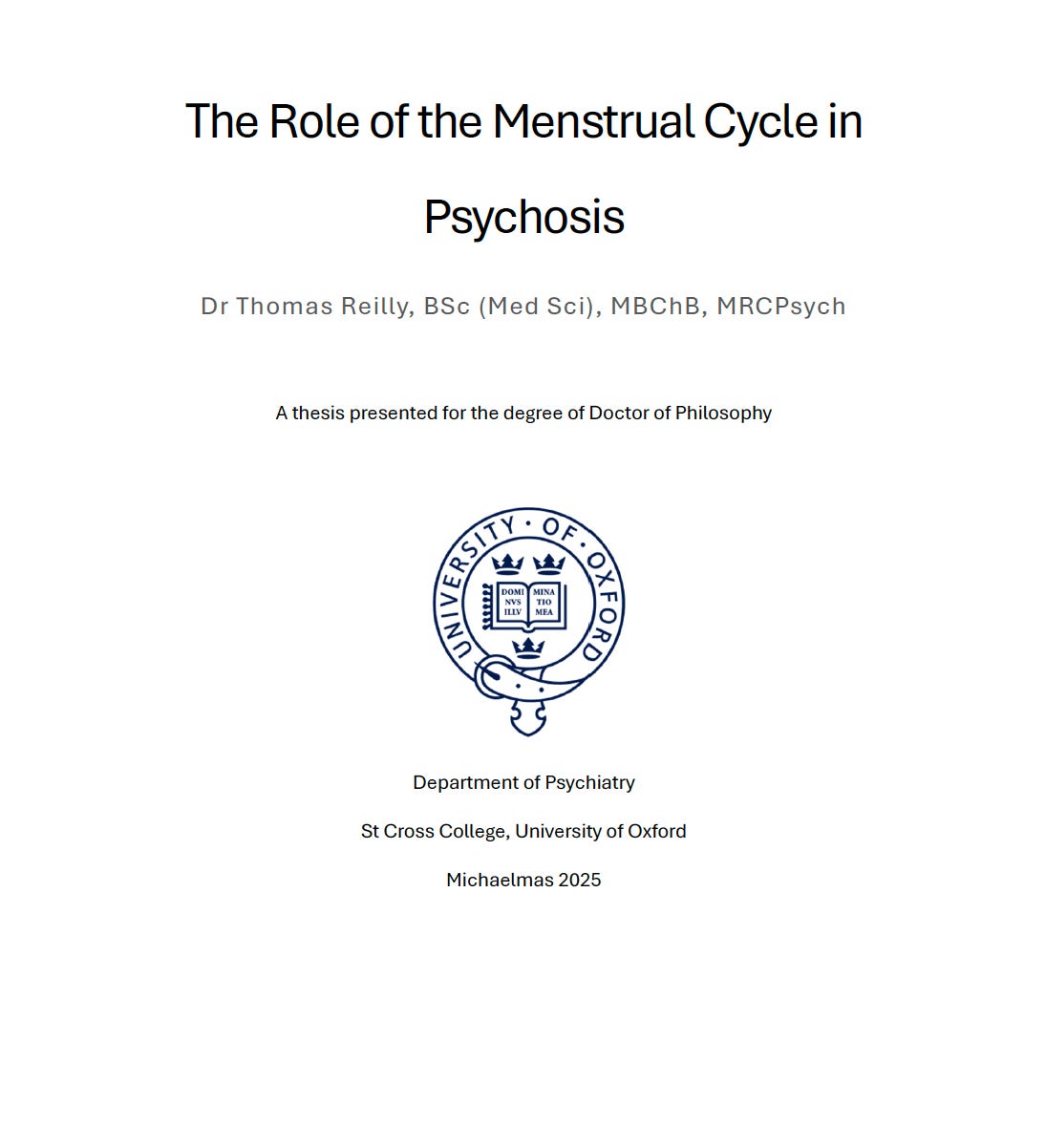
My submitted thesis was the culmination of research conducted during my DPhil and the last milestone before the viva. As Adam says, very few students fail a doctorate at that late stage, because of earlier checkpoint assessments. In Oxford these are the Transfer of Status around the end of the first year and Confirmation of Status at the end of the second year. Each offers an assessment of progress, a potential off-ramp if a student is failing, and a milestone on the journey of being awarded a DPhil:
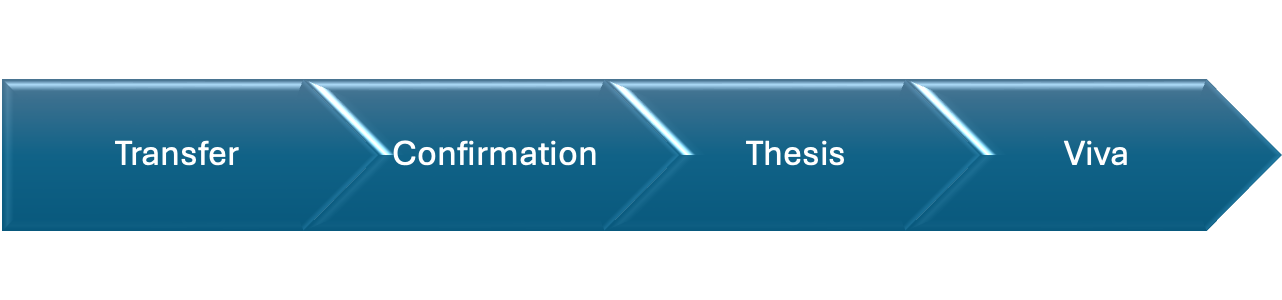
This post isn’t about academic milestones, though. Instead it is about life’s milestones that are otherwise hidden. We all go through such milestones in life. We are born. We go to primary school and later secondary school. Some of us get our first job. Have our first pint. Learn to drive. Unlike academic achievements, these milestones are usually absent from public life.
The first milestone en route to a doctorate is the acquisition of funding. This step, particularly for clinicians, is highly competitive. You usually require a governmental organisation to pay for your student fees, your research costs and your salary as healthcare professional over three years. The value of my fellowship awarded by the MRC was £274,429 - not to be sniffed at. You probably don’t know that the process of obtaining this award was far from straight forward for me.
Looking back, the year 2017 (five years before commencing my fellowship) was pivotal. At the start of that year, I was set on applying for a fellowship to investigate brain activity in psychosis using EEG. I got as far as starting the application and wrote a relatively well-cited review article. Various events led to a course-correction to investigating the role of the menstrual cycle in psychosis. The most personally significant was my father being diagnosed with metastatic prostate cancer.
Embarking on a doctoral fellowship is a huge commitment. With a close family member experiencing a life-limiting illness, I realised that life’s too short and a doctorate too long to be less than fully committed. Two more things happened to me that year. The first was treating a young adolescent girl who experienced strikingly brief but severe episodes of psychosis linked to her menstrual cycle, known as menstrual psychosis. The second was seeing a talk by my future head of department at Oxford, Belinda Lennox, about the potential of sub-typing patients in psychiatry based on biological markers.
A complete change in research direction meant much more time was needed to get back to the point where I was ready to apply for funding. I managed to get (at the second attempt) a ‘preparatory fellowship’ which gives protected time to develop a research idea and work up an application.
During this time I was fortunate to attend the National Female Hormone Clinic with Professor Michael Craig, a psychiatrist who previously trained in gynaecology. Meeting patients with PMDD and other hormone-mediated conditions was incredibly rewarding. In another strange coincidence, one of the treatments we recommend for PMDD, leuprolide, was also keeping my father’s prostate cancer at bay. This medication is a gonadotrophin releasing hormone agonist which works in prostate cancer by suppressing testosterone and in PMDD by suppressing ovarian hormone fluctuations. Attending the clinic convinced me that we could dampen hormonal pathways which worsen mental disorders, much like we hack the hormones which drive prostate cancer.
Around that time I experienced another milestone, my first child was born. Thinking of prognosis in cancer and five year survival rates, I didn’t always appreciate the preciousness of time. These years can be the ones in which a patient meets their grandchildren and when a child gets to know their grandparent.
In 2022, after gaining pilot data, publishing relevant studies, submitting a competitive application and defending my proposed research at a panel interview, I was awarded an MRC fellowship to investigate the effect of the menstrual cycle in women with psychosis. That pales in comparison, though, to the most significant personal milestone of that year, my wedding day.

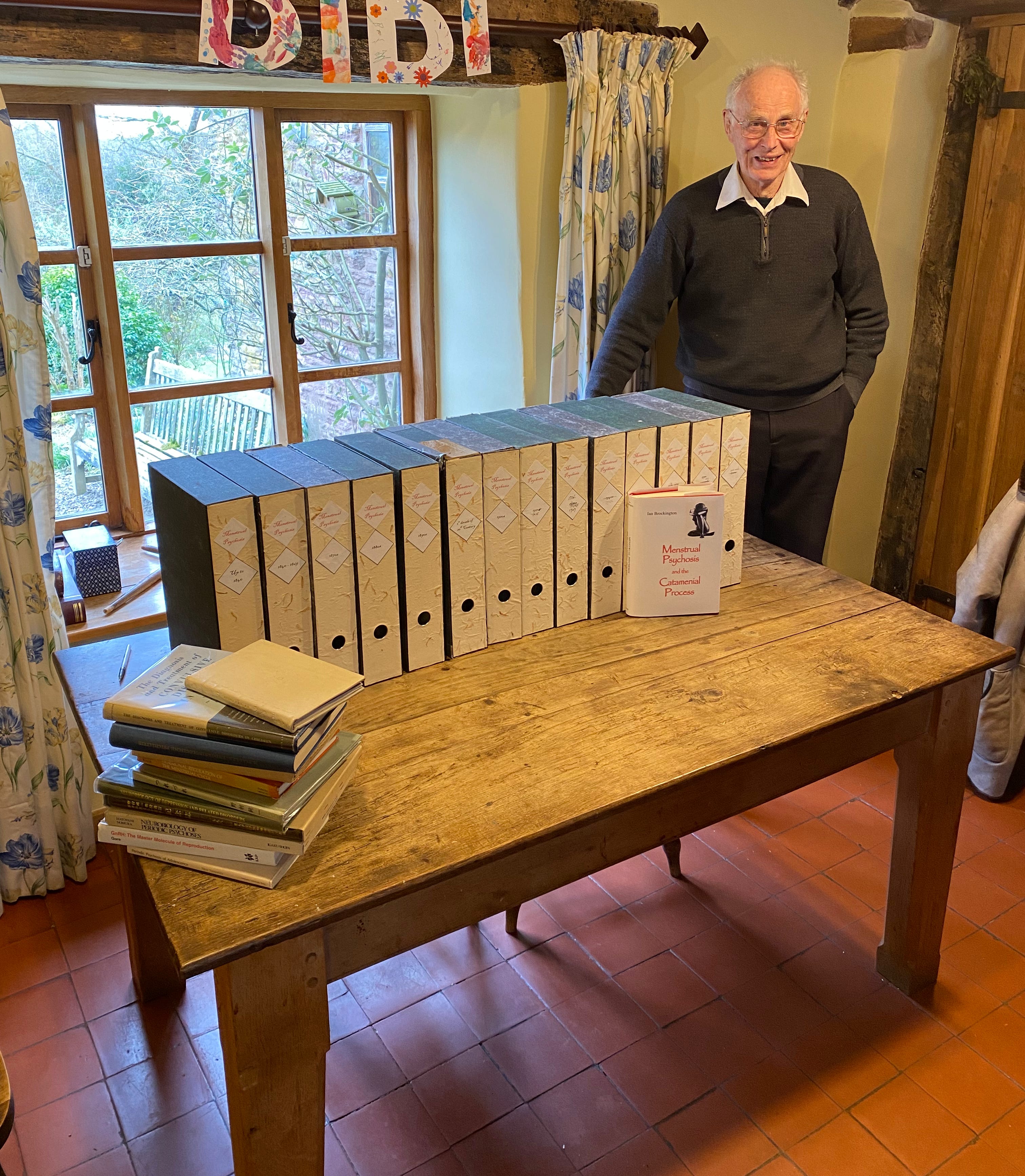
Starting my DPhil led to a number of professional relationships which I consider important milestones too. It was an honour to meet Emeritus Professor Ian Brockington, the world leading expert in menstrual psychosis whose career was based at Birmingham University. Ian was kind enough to host me at his home and provided me with his collection of menstrual psychosis case histories. Analyses of these reports became a crucial chapter in my thesis.
Moving to Oxford was another milestone that brought opportunities, not least the chance to meet many wonderful colleagues in the department of psychiatry. In particular, I was thrilled to discover the department had their very own endocrinologist, Valeria Frighi. Given the intersection between endocrinology and menstrual disorders, she quickly became a trusted source of advice and eventually a supervisor. She brought incisive critique to much of the hormonal psychiatry literature, mine included. This demand for rigour contrasted with her personal warmth and generosity of spirit. Tragically, Valeria died suddenly in a car accident in March 2024, a loss that was felt by me and colleagues across the department.
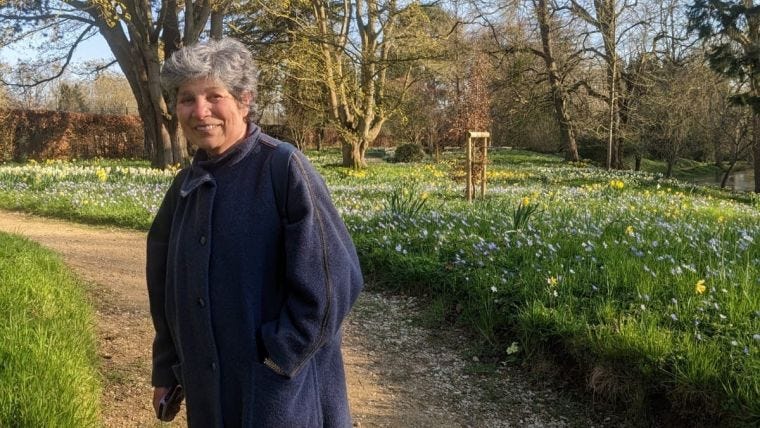
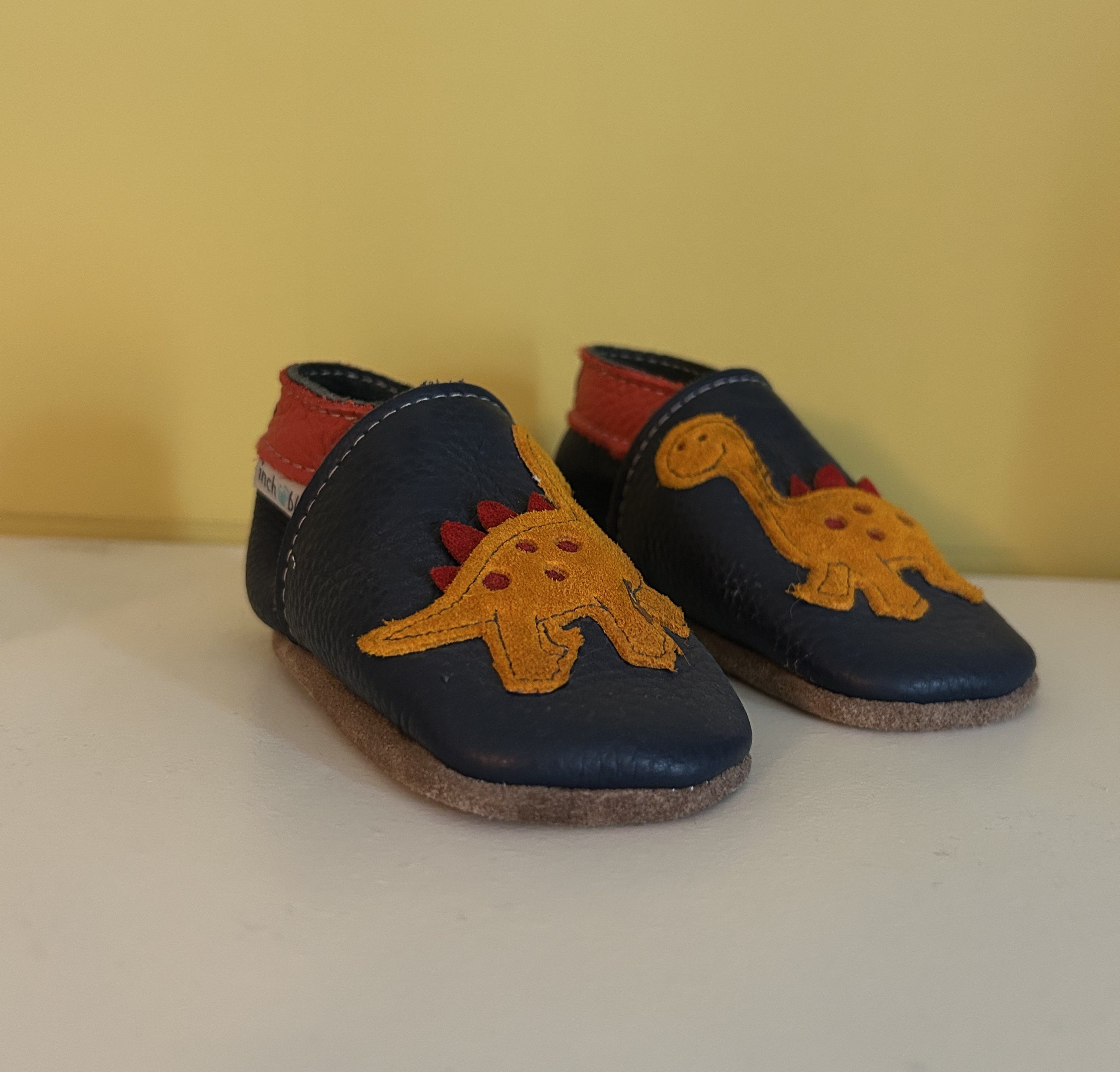
Of course, the loss was far greater for Valeria’s family and friends. I got a sense of this when attending a beautiful celebration of her life in 2025. From our conversations, I knew how important family was to Valeria but seeing her as a much loved mother and grandmother, brought insight into part of her life that had been hidden from me. I found out how happy she had been to learn of the birth of her latest grandchild, whom she had been travelling to see when she died. It gave new meaning to the gift she had sent my second child who was born half-way through my DPhil.
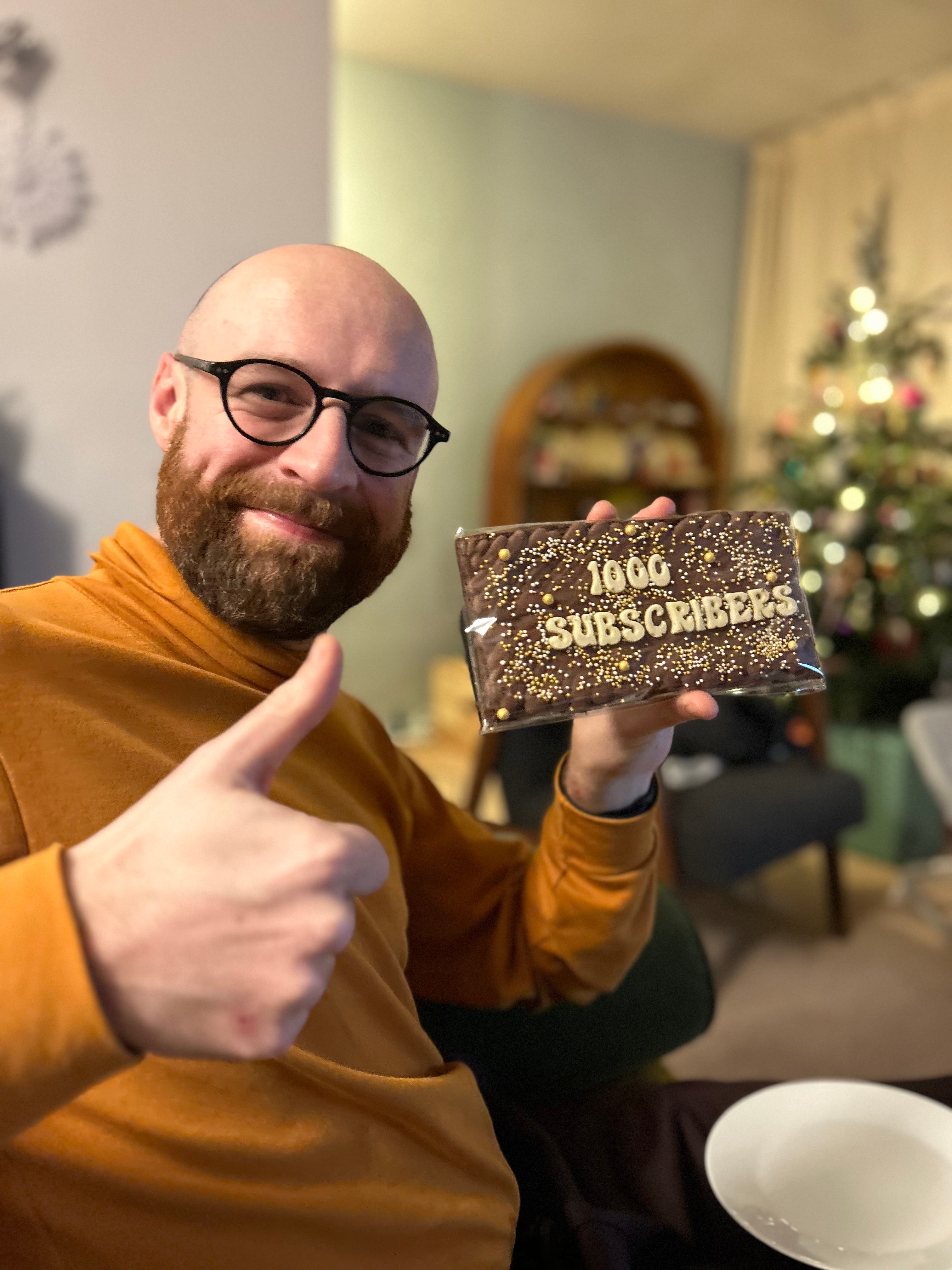
One of my proudest achievements (children and marriage aside) during my DPhil has been growing this Substack. I have sent a newsletter every month over the past four years and have written more words to you than in my entire thesis. It has improved my writing and has connected me with people at my university and across the world. Hitting 1000 subscribers back in December 2023 was one of my most satisfying milestones.
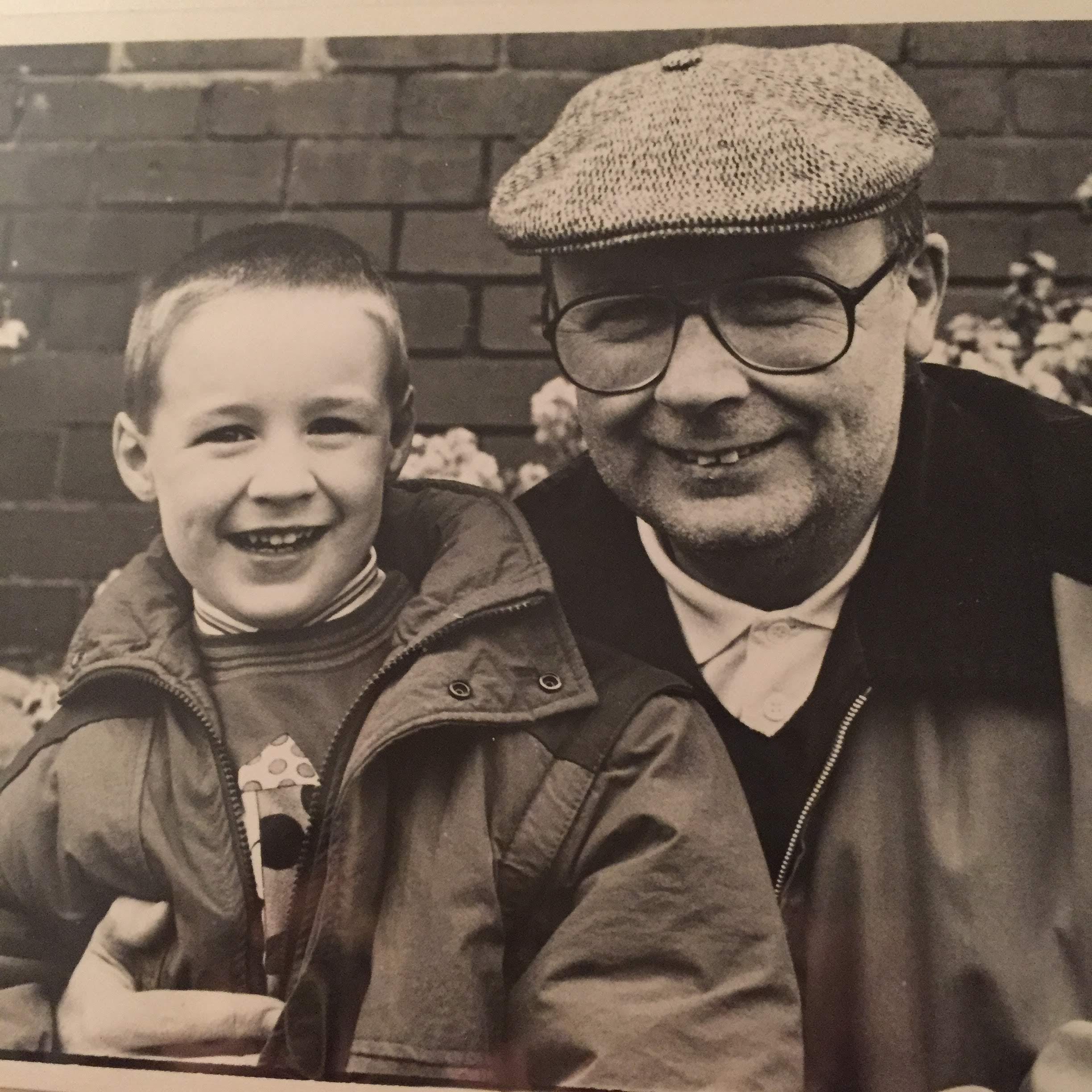
My father died in February 2025 and his anniversary (another milestone) coincided with the week of my viva.
Reflecting back, it’s clear that a lot of life happened while I was busy making plans.
I hope you appreciate that my DPhil journey was longer and had more bumps than the records show.
Most of my achievements weren’t academic.
And the most important milestones were, until now, hidden.
Minor corrections pending